By UpdateSTL.com • September 2026• 10–12 min read
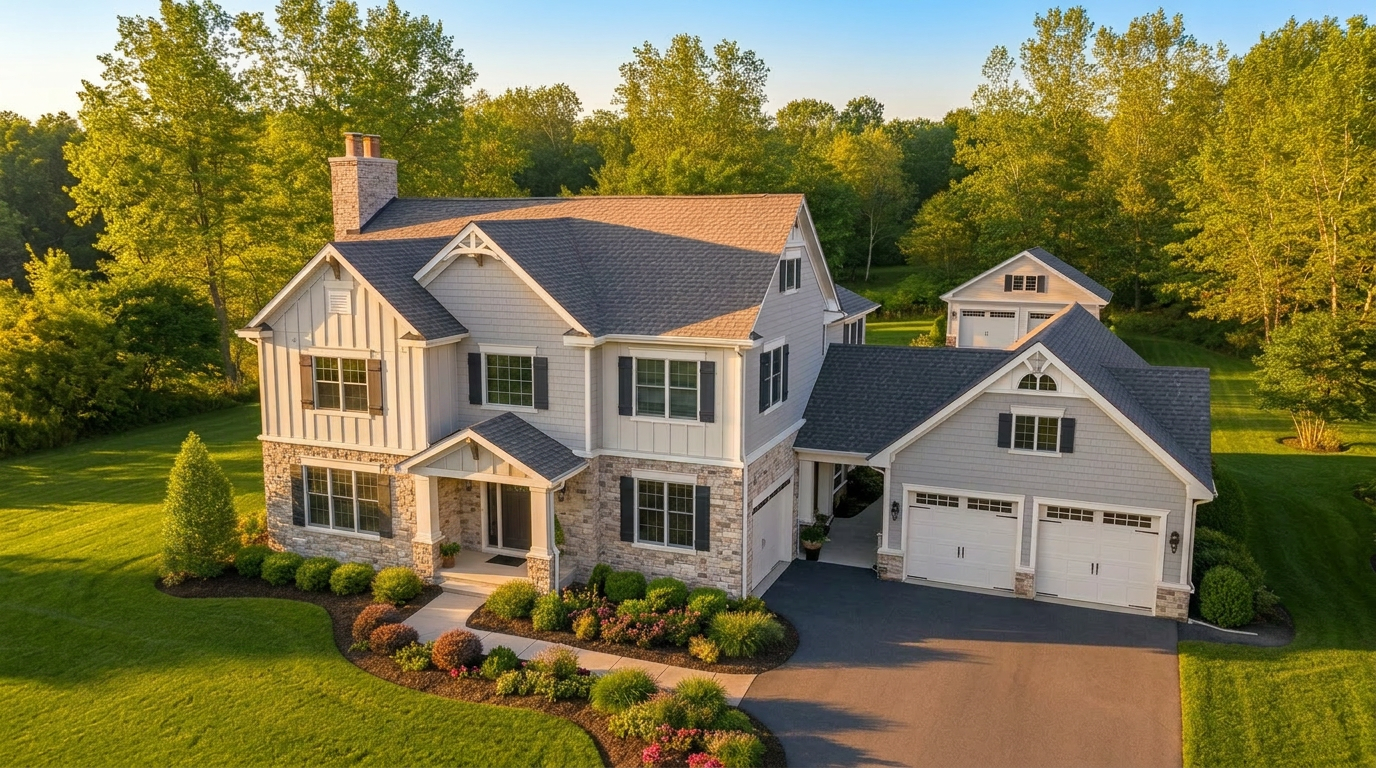
Every year, industry researchers try to answer a question homeowners actually care about: which remodeling projects give you the most value back when you sell? For several years running, the answer has skewed heavily toward the exterior of the house — garage doors, entry doors, siding, stone accents, and decks routinely outperform interior projects in national cost-recovery rankings.
That's a useful signal, but it's easy to misread. These numbers come from a national model, not a St. Louis-specific appraisal, and "cost recouped" is not the same thing as "guaranteed profit." This guide walks through the current data, explains what it actually measures, and helps you think through which exterior improvements make sense for your home, your budget, and your timeline.
Why Buyers Notice the Exterior First
Curb appeal isn't just a real-estate cliché. The exterior of a home is the first thing a buyer sees, whether they're driving by, scrolling listing photos, or walking up for a showing. A tired garage door, chalky siding, or a sagging deck can create doubt before a buyer even steps inside — doubt that's hard to undo with a beautifully renovated kitchen.
Exterior condition also acts as a proxy for how well a home has been maintained overall. Buyers and their agents tend to assume that a home with a fresh, well-built exterior has probably been cared for in less visible ways too. That perception is a big part of why exterior projects tend to perform well in cost-recovery studies, even when the material cost is modest compared to a major interior remodel.
How to Read a Cost vs. Value Report
The most widely cited source for this kind of data is Zonda's annual Cost vs. Value Report. Each year, it estimates the average cost of dozens of common remodeling projects and pairs that with estimates from real-estate professionals about how much value each project would add to a home's resale price in that market. Dividing the estimated resale value by the estimated cost gives you the "cost-recouped" percentage.
Important context: these are national averages built from a standardized project scope and a model home. Your actual project cost, your home's price bracket, and what buyers expect in your specific St. Louis neighborhood can all push your real-world result higher or lower than the published percentage.
With that caveat firmly in mind, here's how several exterior projects stacked up in the most recent national estimates.
2025 National Cost-Recovery Snapshot
| Project | Est. Cost Recouped (National Avg.) |
|---|---|
| Garage door replacement | 267.7% |
| Steel entry door replacement | 216.4% |
| Manufactured stone veneer | 207.9% |
| Fiber-cement siding replacement | 113.7% |
| Vinyl siding replacement | 96.5% |
| Wood deck addition | 94.9% |
| Composite deck addition | 88.5% |
A few things stand out. First, the projects at the top of the list — garage doors, entry doors, stone veneer — tend to be relatively low-cost, highly visible upgrades. A modest investment in a new garage door can transform how the whole facade reads, which helps explain the outsized percentage. Second, siding and decks, while still strong performers, involve larger project costs, so their recovery percentages are naturally lower even when the dollar value added is substantial.
None of these numbers means you'll get more money back than you spend on every home, in every market, at every price point. They mean that, on average across the homes studied, these projects were estimated to add resale value roughly in proportion to their cost — and in the case of garage doors and entry doors, often more than their cost.
Garage Doors: The Small Project With Outsized Impact
A garage door often makes up a large percentage of a home's visible front elevation, especially on homes with attached garages facing the street — common across many St. Louis subdivisions. Swapping a dented, dated door for a clean, well-proportioned one is one of the fastest ways to change how a house is perceived from the curb.
When evaluating options, look at panel style, window placement, and insulation. A door that matches the architectural style of the home — carriage-style for a traditional facade, flush panel for something more modern — tends to look intentional rather than generic.
Entry Doors: Small Footprint, Big First Impression
The front door is the literal threshold buyers cross, and it's one of the few exterior elements a visitor interacts with directly. Steel entry doors have consistently shown strong national cost-recovery figures because they combine a relatively low material cost with a big perceptual upgrade — especially when paired with fresh paint or stain on the surrounding trim and a modern lockset.
Fiberglass doors are worth considering too, particularly on facades with heavy sun exposure or harsh winters, since they resist warping and denting differently than steel. The resale data referenced here focuses on steel doors specifically, so treat fiberglass as a design and durability decision rather than assuming an identical cost-recovery percentage.
Manufactured Stone Veneer: Targeted Impact
Manufactured stone veneer applied to an entryway, porch base, or lower facade section has ranked near the top of national cost-recovery estimates for years. It works well specifically because it's usually installed as an accent rather than covering the whole house, which keeps the project cost contained while still meaningfully upgrading the look of the front elevation.
Stone veneer pairs naturally with other exterior work. If you're already planning entry door or porch updates, it's worth asking your contractor whether a stone accent at the base of the porch or around the entry makes sense as part of the same project.
Fiber Cement vs. Vinyl Siding
Both siding types recouped a strong share of their cost in the national data, with fiber cement estimated higher than vinyl. Fiber cement typically costs more upfront but is often perceived by buyers and agents as a more durable, higher-end material, which likely contributes to its stronger recovery percentage.
Vinyl siding remains a practical, lower-cost option that still performed well nationally. If your existing siding is faded, cracked, or has multiple failed sections, replacement — in either material — tends to matter more to buyers than the choice between the two materials themselves. If you're also weighing storm exposure and long-term durability, our guide to storm-ready remodeling in St. Louis covers how exterior material choices hold up against local weather.
Don't Skip Roof, Gutters, Soffit, and Fascia
Roofing wasn't part of the specific figures above, but it deserves a place in any conversation about exterior resale value, because a compromised roof can undercut every other improvement on the list. Buyers and their inspectors pay close attention to roof condition, and visible wear, moss, or missing shingles can trigger price negotiations regardless of how nice the siding or garage door look.
Gutters, downspouts, soffit, and fascia matter for the same reason: water management protects the rest of the exterior investment. A new garage door means little if water is pooling against the foundation nearby. If you're mapping out a roofing project, our roof planning resource (coming soon) will help you think through scope before you call a contractor.
Decks: Wood, Composite, and What the Numbers Don't Say
Wood deck additions showed a higher estimated cost-recovery percentage than composite decks in the national data, mostly because composite construction costs more per square foot. That doesn't automatically make wood the smarter choice for your household. Composite decking generally requires less staining, sealing, and board replacement over time, which can matter more if you're planning to enjoy the deck for a decade rather than sell next year.
If you're deciding between an open deck, a covered structure, or a screened porch, it's worth reading our comparison of covered decks, patios, and screened porches before committing to a material or footprint. And if you want a sense of scope and planning questions before requesting quotes, the deck planning tool is a good starting point.
Lighting, Paint, and Trim: The Low-Cost Multipliers
Not every exterior improvement needs to be a major project to move the needle. Fresh paint on trim and shutters, updated exterior light fixtures, house numbers, and a clean, well-maintained lawn all reinforce the "well cared for" impression that bigger projects create. These smaller touches don't typically appear in national cost-recovery studies because they're harder to standardize, but contractors and agents consistently point to them as inexpensive ways to support a larger exterior investment.
Underbuilding, Overbuilding, and Fixing Problems First
Two mistakes come up often when homeowners chase resale value. The first is overbuilding — putting premium materials or elaborate design elements on a home in a neighborhood where comparable sales don't support that level of finish. The second is underbuilding, or treating cosmetic upgrades as a substitute for necessary repairs, like ignoring a failing roof deck in favor of new siding on top of it.
Before you chase a specific cost-recovery percentage, have your contractor assess whether there are underlying issues — moisture intrusion, rot, structural settling — that need to be addressed first. Skipping this step can mean a beautiful new exterior over a problem that resurfaces at inspection time. Our overview of what level of finish means in a remodel can help you calibrate scope appropriately for your neighborhood.
National Data vs. Your Local Market
It bears repeating: the percentages in the table above are national averages, not St. Louis figures. Local factors — housing inventory, buyer expectations in your specific neighborhood, and how your home compares to nearby listings — all influence what an exterior project is actually worth when you sell. The National Association of Realtors has also noted that homeowners considering a remodel benefit from involving a real-estate agent early, specifically to understand how local buyers respond to particular improvements.
Selling Soon vs. Staying Long-Term
If you're planning to list your home within the next year or two, prioritizing the projects with strong national cost-recovery percentages — garage door, entry door, targeted stone accents, and any overdue siding or roof repairs — is a reasonable strategy. These are the improvements most likely to influence buyer perception during a relatively short holding period.
If you're staying put for the foreseeable future, weigh resale data against your own enjoyment and maintenance preferences. A composite deck may cost more upfront and recoup a smaller percentage, but if it means fewer weekends spent sealing wood, that trade-off might be worth it for your household. For a broader sense of current material and labor pricing across exterior and interior projects, see our 2026 St. Louis remodeling costs guide.
A Practical Priority Checklist
- Address active leaks, rot, or structural issues before cosmetic upgrades
- Evaluate the garage door and entry door for quick, high-impact wins
- Consider a targeted stone veneer accent near the entry if budget allows
- Replace failing siding with fiber cement or vinyl based on budget and durability goals
- Confirm gutters, soffit, and fascia are managing water properly
- Choose deck materials based on both resale expectations and long-term maintenance appetite
Once you've triaged the list, bring it to a contractor who can help you sequence the work. Some projects, like siding and gutters, are more efficient to tackle together than on separate timelines. Our guide on how to hire a home remodeling contractor in St. Louis walks through the questions worth asking before you sign a contract.
Frequently Asked Questions
Is a 267.7% cost-recouped garage door percentage realistic for my house?
That figure comes from Zonda's national Cost vs. Value model, which compares an average project cost with what real-estate professionals estimate it would add to a home's resale price in that market. It is a directional signal, not a guarantee for any single St. Louis home. Your actual return depends on your home's price point, your neighborhood, and how outdated the existing door looked.
Should I replace my siding or my roof first if I can only do one?
Start with whichever component is actively failing or causing water intrusion. A roof with active leaks or missing shingles should generally come before a cosmetic siding upgrade, since water damage can undermine the value of everything else. If both are sound but dated, fiber-cement siding has historically shown strong cost-recovery in the Zonda data.
Does a wood deck really recoup more than a composite deck?
In the most recent national Cost vs. Value estimates, wood deck projects showed a higher estimated cost-recouped percentage than composite deck projects, largely because composite decks cost more to build. That does not mean wood is the better material for every homeowner — composite decks typically need less ongoing maintenance, which matters if you plan to stay in the home for years.
Are these Cost vs. Value numbers specific to the St. Louis market?
No. The Zonda Cost vs. Value Report publishes national and regional averages across many U.S. markets, and St. Louis is not always broken out as its own line item. Treat the percentages as a national benchmark and talk with a local remodeler and real-estate agent about how buyers in your specific St. Louis neighborhood respond to these projects.
If I'm not selling soon, should I still care about resale value?
It's worth knowing, but it shouldn't be the only factor. If you plan to stay in your home for many more years, prioritize the improvements that fix real problems and that you'll enjoy daily. Resale data is most useful as a tiebreaker when you're choosing between two reasonable options.
What's the biggest mistake homeowners make when chasing resale value?
Overbuilding for the neighborhood — installing finishes or additions well above what comparable homes nearby support — and underbuilding, or skipping basic repairs and jumping straight to cosmetic upgrades. Both can leave money on the table. A quick conversation with a local agent before you start can help you calibrate.
Related Reading
Storm-Ready Remodeling in St. Louis
How to build exterior resilience against the region's storms while planning upgrades that also support resale value.
Read the articleCovered Deck vs. Patio vs. Screened Porch
A side-by-side comparison to help you choose the outdoor living upgrade that fits your home and budget.
Read the articleRemodeling Costs in St. Louis for 2026
Current pricing context for exterior and interior projects across the St. Louis metro area.
Read the articlePlanning an Exterior Project in St. Louis?
UpdateSTL.com is powered by Wehmeier and Son, a St. Louis remodeling team that helps homeowners weigh resale considerations against everyday livability before a single material is ordered. Whether you're comparing garage doors, siding options, or deck materials, we can help you sort the projects that make sense for your home from the ones that just look good in a national report.
Explore our full range of work on the services page, or reach out directly through the contact page. You can also call us at 636-234-3333 or email UpdateSTL@wehmeierandson.com to talk through your exterior remodeling plans.
Ready to Prioritize the Right Exterior Projects?
Let's walk your home together and build a plan that balances resale value, durability, and your budget.