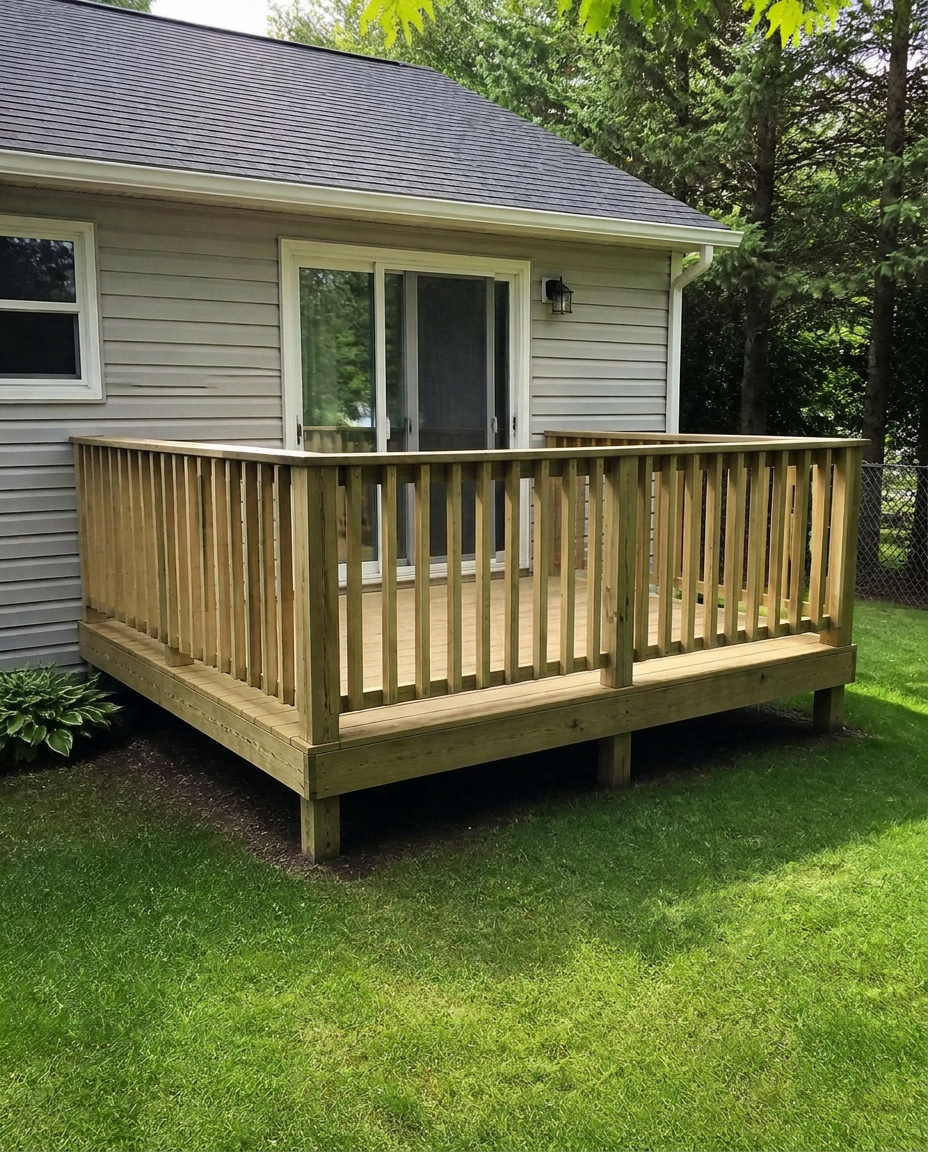
What a Replacement or New Deck Really Costs — and How to Price Yours
By UpdateSTL.com • July 2026• 6 min read
"How much does a 10x10 deck cost?" is one of the most common questions homeowners ask before they call a contractor. It sounds simple, but the honest answer is: it depends. Two decks that are the same size can cost very different amounts once you factor in height, railing, stairs, demo, drawings, and permits.
That is exactly why UpdateSTL.com added a deck estimator to the tools section. Instead of guessing, you can plug in your details and get a rough material and labor range in a couple of minutes.
A realistic 10x10 deck cost range
A 10x10 deck is 100 square feet — a small footprint, but still a real structure with framing, footings, railing, and often a set of stairs. For a standard pressure-treated wood deck at ground level, most homeowners land somewhere in this range:
Low to the ground, minimal railing, short stairs.
Full railing, a stair run, demo of a small old deck.
Taller deck, longer stairs, drawings, and permits.
These are planning ranges, not quotes. Your number moves with local labor, material prices, and the exact details of your build.
What's included in the material cost
Even a small deck adds up because you are buying a full structure, not just deck boards. Here is what typically goes into the material budget:
- Pressure-treated framing, joists, and beams
- Pressure-treated deck boards
- Footings, post bases, and concrete
- Wood railing, posts, and balusters
- Fasteners, joist hangers, and hardware
Labor covers layout, footings, framing, decking, railing, stairs, and cleanup. Want to see how the split looks for your size? You can get a starting deck budget with our free tool.
Why a Deck Estimator Helps Before You Compare Bids
Deck bids can look wildly different because contractors make different assumptions about height, railing, stairs, demo, and permits. If you don't know the cost drivers, it is hard to tell which bid is actually complete. Knowing the major variables lets you ask better questions and spot which quotes are comparing the same scope.
Deck height
A ground-level deck is cheaper. The taller the deck, the more posts, framing, and railings you'll need.
Railing & stairs
Continuous railing and a long stair run add material and labor fast.
Demo & disposal
Tearing out and hauling away an old deck adds cost before the new build even starts.
Drawings & permits
Engineered drawings and local permits are common on decks and vary by municipality.
Use the UpdateSTL deck estimator to get a starting point before you call for a quote.
"A 10x10 deck is not priced by size alone. Material, railing, stairs, height, permits, demo, and finish level can completely change the number."
Three 10x10 Deck Examples
Two decks can be the same size but a completely different project. Here are three common finish levels for the same 100 square foot footprint.
Basic Deck
Pressure-treated wood, simple ground-level layout, and a practical finish. Best for a functional outdoor platform without many upgrades.
Mid-Range Deck
Composite decking, upgraded fasteners, cleaner railing posts, and better stairs. This is the level most homeowners picture when they say "updated."
Premium Deck
Upgraded railing, lighting, custom stairs, hidden fasteners, and outdoor-living details so the deck feels like an extension of the house.
What Actually Drives Deck Cost
Size gives you a starting point, but these are the variables that move the price most. Each one can shift a 10x10 deck up or down a full tier.
Wood vs. Composite
The first big decision is usually the decking material. Pressure-treated wood is typically the lower-cost option up front and can be a good fit when you are trying to control the initial budget. Composite usually costs more up front, but it needs far less maintenance, does not require regular staining, and keeps a cleaner finished look over time.
Wood may make sense if…
- You want a lower upfront cost
- You are comfortable with maintenance
- You plan to stain or seal the deck
- You want a simple, budget-conscious project
Composite may make sense if…
- You want lower maintenance
- You want a cleaner, more consistent look
- You want a long-term outdoor living space
- You do not want to keep staining and sealing over time
Not sure which way to go? You can get a starting deck budget for both materials before you decide.
Deck Cost Comparison
A quick side-by-side of how each choice shifts as you move from a budget build to a full outdoor living space.
| Item | Lower Cost | Mid-Range | Higher Cost |
|---|---|---|---|
| Material | Pressure-treated wood | Composite | Premium composite or custom |
| Railing | Basic | Upgraded | Aluminum, cable, glass, or custom |
| Stairs | None or simple | Standard stairs | Custom stairs or landing |
| Lighting | None | Basic stair or post lights | Integrated lighting plan |
| Finish Level | Clean and functional | Updated and finished | Custom outdoor living |
| Best For | Budget project | Most homeowners | Forever home or high-value property |
The 2026 Trend: Outdoor Living
Decks are no longer just platforms. Homeowners are treating outdoor spaces like a second living room, and that changes how a deck should be planned. It does not mean every deck needs to be expensive — it means the deck should be built around how you will actually use it. Here is where 2026 outdoor living is heading:
- Warmer natural colors
- Composite and low-maintenance materials
- Mixed materials like stone, metal, wood tones, and composite
- Better seating areas and outdoor lighting
- Shade features and cleaner railings
- More intentional, purpose-built layouts
Before You Build, Ask These Questions.
The answers to these decide where your deck lands in the cost range above.
- How far off the ground will the deck sit?
- How much railing and how many stairs do you need?
- Are you removing an old deck first?
- Will your municipality require drawings and a permit?
- What grade of wood and hardware do you want?
- Do you want to add features later, like a roof or built-in seating?
Not sure where your deck lands? Start with the deck estimator and get a rough planning range.
Use the UpdateSTL Deck Estimator
If you are thinking about building or replacing a deck, start with the FREE UpdateSTL deck estimator. Enter your deck size and details, and you will get a rough material and labor range you can use to plan your budget and check any bids you receive.
It is free, it takes a couple of minutes, and there is no obligation. When you are ready for real numbers on your specific project, we are happy to walk the site and give you a detailed quote.
Sources Used for This Guide
- Trex Protect deck installation cost guide
- Angi deck cost guide
- Zonda 2025 Cost vs. Value Report
- City of St. Louis building permit guidance
- St. Louis County deck and porch permit guidance
- Houzz 2026 outdoor living trends
- Trex 2026 outdoor living trends
- National Association of REALTORS Remodeling Impact Report: Outdoor Features