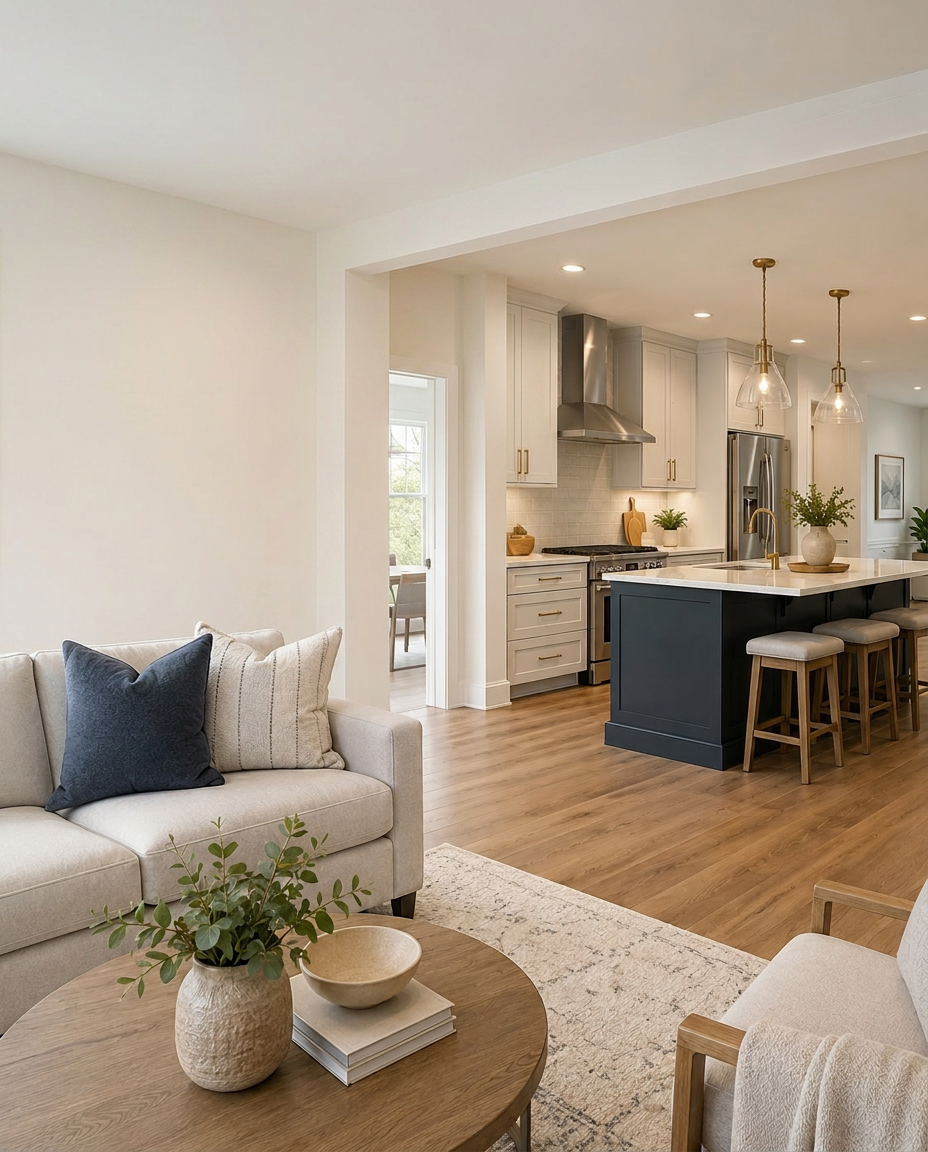
How to Know Whether Your Home Can Work for the next 10, 20, or 30 Years
By UpdateSTL.com • July 2026• 7 min read
The biggest remodeling trend in 2026 is not a cabinet color, countertop material, or tile pattern. It is homeowners asking a much bigger question: Can this house still work for us later?
of adults 50+ want to stay in their current home as long as possible.
AARP
of U.S. homes met a fuller aging-ready standard in Census analysis.
U.S. Census Bureau
projected homeowner improvement and maintenance spending by end of 2026.
Harvard JCHS
of aging-in-place updates included bathroom modifications.
HIRI 2026
The trend is not what most people think.
Most people hear "remodeling trend" and think of finishes. White oak cabinets. Quartz counters. Luxury vinyl plank. Walk-in showers. Black fixtures.
Those choices matter. But they are not the real trend.
The real trend is homeowners remodeling now so they are not forced to move later.
They like the neighborhood. They like the lot. They like the memories. They may also like the mortgage they already have. What they do not like is the way the house currently works.
People still want a better home. They just do not always want a different address.
Why this is happening now
- Mortgage rates make moving more expensive for homeowners who already have a lower payment.
- Inflation makes waiting risky when materials, labor, and household costs keep changing.
- Many replacement homes still need remodeling anyway.
- Older homeowners and families with aging parents are planning earlier.
The decision homeowners are really making
Option 1: Move later, compete in the market, pay selling and buying costs, and hope the next home works better.
Option 2: Remodel now, protect the parts of the home they already love, and make the current house work longer.
What makes a house aging-in-place ready?
An aging-in-place home is not a hospital-looking home. Done correctly, it looks like a beautiful, well-planned remodel. The difference is that every decision also supports safety, access, comfort, cleaning, maintenance, and long-term use.
The best aging-in-place features are often the ones you barely notice. They simply make the home easier to live in.
Below is a checklist that starts with the bathroom and moves into the entryway, the kitchen, the flooring, lighting, paint, and trim. Use it to plan your remodel, stay within your budget, and focus on the major items that help keep your home livable for years to come.
Start with at least one long-term bathroom.
Not every bathroom has to become a roll-in shower. But at least one main-level bathroom should be planned for long-term use.
- Curbless or low-threshold shower
- Blocking for future grab bars
- Slip-resistant flooring
- Handheld shower head and bench
- Comfort-height toilet
- Bright task and night lighting
Create one safe way into the home.
Every exterior door does not need a ramp. The goal is one reliable entrance that works long term.
- No-step or low-threshold access where possible
- Covered entrance
- Good exterior lighting
- Wider door and lever handle
- Non-slip walking surface
- Safe transition from garage or driveway
Make the kitchen easier to use, not just prettier.
A long-term kitchen reduces bending, reaching, twisting, and frustration.
- Deep drawers and pull-out trays
- Better task lighting
- Microwave at reachable height
- Easy-read appliance controls
- Repairable appliances with service access
- Durable, low-maintenance surfaces
Choose continuous, durable, low-risk flooring.
Flooring should help people move through the home safely and make the home easier to clean.
- Low-glare and slip-resistant finish
- Minimal height transitions
- Water-resistant where needed
- Matte, textured LVP can be a strong option
- Avoid loose rugs and thick carpet
- Consistent flow from room to room
Improve visibility before there is a problem.
Lighting is one of the most overlooked aging-in-place upgrades.
- Bathroom task lighting
- Kitchen under-cabinet lighting
- Stair and hallway lighting
- Motion or night lighting
- Exterior path lighting
- Easy-access switches or smart controls
Use finishes that are easy to clean and easy to see.
Paint and trim should support visibility, contrast, maintenance, and a calm, timeless look.
- Washable wall paint
- Durable enamel on trim
- Warm neutral wall colors
- Contrast between doors, trim, and floors
- Avoid dark rooms without strong lighting
- Simple trim profiles that are easy to touch up
Before you move, ask these questions.
If the answer to several of these is "no," your home may not be ready for long-term living yet. That does not mean you need to move. It means you need a plan.
- Can we safely enter the home from the driveway, garage, or front walk?
- Is there one bathroom that could work long term?
- Can the kitchen be used without constant bending and reaching?
- Are the floors consistent, durable, and low-risk?
- Is lighting strong enough at night, on stairs, and in bathrooms?
- Could the home work if stairs became harder later?
How UpdateSTL.com helps homeowners do this the right way.
At UpdateSTL.com, powered by Wehmeier and Son, we help homeowners walk through the house and identify what matters most. Not every home needs every upgrade. Some homes need a bathroom first. Some need flooring and lighting. Some need a kitchen. Some need a covered entry, finished basement, garage, or main-floor living plan.
The point is not to remodel blindly.
The point is to remodel the right things, in the right order, so the home works longer.
Sources used for this post
- HIRI, Aging in Place Study, 2026.
- Home Improvement Research Institute, 6 Reasons to Consider Aging-in-Place Remodels in Your Strategic Roadmap.
- Joint Center for Housing Studies of Harvard University, Remodeling Growth Set to Downshift in Late 2026.
- AARP, 2024 Home and Community Preferences Survey.
- U.S. Census Bureau, Old Housing, New Needs.
- National Association of Home Builders, Practical Strategies for Aging-in-Place Remodels.
- Freddie Mac, Primary Mortgage Market Survey, June 25, 2026.
- U.S. Bureau of Labor Statistics, Consumer Price Index Summary, May 2026.